How Long Does a Building Permit Take? A State-by-State Reality Check
Building permit timelines for a new house range from 2 weeks to 9 months — and the reason that range is so wide is that permits are issued by individual jurisdictions, not states. Your timeline is determined by four variables: where you're building, what you're building, how complete your submission is, and how busy your plan checker is.
Understanding those variables won't give you a guarantee, but it will give you a realistic range — and enough control to avoid the delays that derail most projects.
Why can't anyone give you a straight answer on permit timelines?
The honest answer is that there isn't one. Permit timelines are set at the jurisdiction level — city, county, or municipality — not by state law. Two projects in the same state, filed on the same day, can face timelines that differ by four months based purely on which side of a county line they sit on.
Generic guides that offer a single national average are describing the median of an enormous range. They're not wrong, exactly — they're just not useful. What drives your specific timeline is your specific building department: its staffing level, its review cycle, its backlog, and whether it has adopted electronic submission or still operates on paper.
What are the four variables that actually determine your permit timeline?
Four factors determine how long you'll wait — and two of them are within your control.
Jurisdiction type is the single biggest predictor. Rural counties typically have lighter application volumes and smaller staff, which paradoxically often means faster turnaround. Major metros have larger departments but correspondingly larger backlogs. Coastal zones, historic districts, and seismic overlay areas add layers of review — sometimes by agencies entirely separate from the building department — that can double or triple baseline timelines. In Los Angeles, for example, a single building permit can require clearance from up to 12 separate agencies.
Project complexity matters in proportion to how much your design deviates from standard residential construction. A plan-set build using a pre-engineered design moves through plan check faster than a fully custom home, because reviewers have less to interpret. New construction takes longer than renovation. Anything involving structural engineering sign-off, geotechnical reports, or energy compliance documentation adds review time.
Submission completeness is the variable most applicants underestimate — and the one most within your control. An incomplete application doesn't pause your timeline while you gather missing documents. In most jurisdictions it resets it. You go back to the end of the queue. A single missing energy compliance form or an unsigned structural drawing can cost you 6 to 8 weeks.
Plan checker workload fluctuates seasonally. Summer is peak submission season in most markets — contractors and homeowners target summer starts, which means applications pile up in spring. Winter submissions, particularly in markets without extreme cold, often move through review faster simply because the queue is shorter. This is a small lever, but it's a real one.
How long does a building permit realistically take by jurisdiction type?
Use these ranges as planning baselines, not promises.
Rural county: 3–6 weeks for straightforward new construction. Some rural jurisdictions can move faster; very few take longer unless the project is unusually complex.
Mid-size city: 6–12 weeks. This is the most common range for suburban residential builds in mid-tier markets. First review typically takes 4–6 weeks; a single round of corrections adds another 3–4.
Major metro (standard): 3–5 months. Cities like Chicago, Denver, Phoenix, and Atlanta sit in this range for standard residential permitting. Expedited review is often available — where building departments offer their own fast-track service, it typically costs 50–100% more than standard review fees but can meaningfully compress the timeline.
Major metro with coastal, historic, or seismic overlay: 5–9 months. This is the reality for much of California, coastal Massachusetts, Hawaii, and significant portions of New York. In these jurisdictions, your project may require review by multiple agencies, each with their own timelines that run sequentially, not in parallel.
If you'd rather not navigate that process alone, permit expediting services — professionals who manage the submission process on your behalf — typically run $500–$2,500 for residential projects, according to industry data compiled by Shovels, a construction data platform. Whether that cost is worth it depends on your schedule pressure and how familiar your architect is with the local jurisdiction.
Not sure where your project lands on the timeline? Office Hours is a free 45-minute session — bring your site, your jurisdiction, and your schedule, and we'll work through what to expect before you commit to anything.
Which states have the slowest — and fastest — permit processes?
State-level comparisons are a starting point, not a conclusion.
Notoriously slow: California, New York, Hawaii, and Massachusetts consistently rank among the most time-intensive permit environments in the country. California's complexity is structural: Title 24 is not a single code but a suite of 12 Parts — including the Building Code, Residential Code, Energy Code, and CALGreen Code — and a permit application must demonstrate compliance with all applicable parts. Add coastal commission requirements or seismic overlay zones, and you're dealing with sequential reviews across agencies that each have their own clocks.
Faster systems: Texas, Florida (outside coastal counties), Arizona, and Tennessee have generally more streamlined residential permitting. Texas is worth noting specifically: under House Bill 14, which took effect in September 2023, cities are required to review residential building permits within 45 days. In practice, major Texas cities often move faster — Dallas offers same-day over-the-counter permits for simple residential projects, and Fort Worth typically turns around plan-review permits in 2–3 weeks. Florida's coastal counties are a significant exception — Broward, Miami-Dade, and Monroe counties operate in a different category entirely.
The important caveat: state-level reputation reflects the average of wildly different local experiences. A project in San Diego and a project in rural Shasta County are both in California — their permit timelines will not resemble each other. The most reliable data source for your specific project is a direct call to your local building department. Ask specifically: what is your current first-review turnaround for new residential construction?
What can you actually do to shorten your permit timeline?
The most effective interventions happen before you submit, not after.
Request a pre-application meeting. Most jurisdictions offer them; most applicants don't use them. A 30-minute conversation with a plan checker before submission tells you exactly what they'll be looking for — which drawings, which calculations, which third-party reports. It also puts a human face on your application, which matters more than it should.
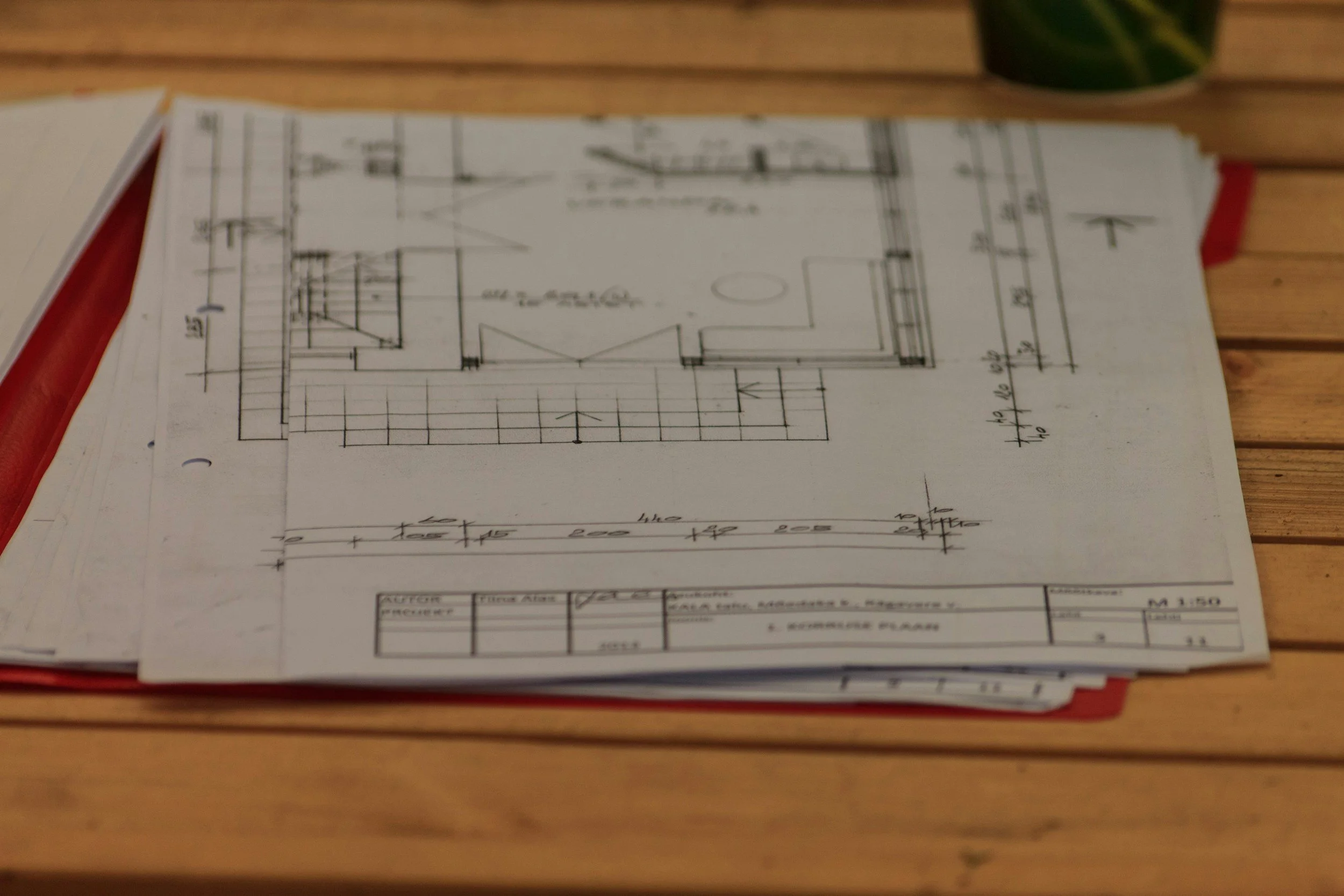
Submit a complete package the first time. This is the highest-leverage action available to you. A complete residential permit package typically includes architectural drawings, structural drawings with engineer stamp, energy compliance documentation, site plan with setbacks and easements, soils report where required, and a completed application form with all signatures. Missing any of these doesn't slow your application — it stops it.
Consider a phased permit if your schedule is tight. Some jurisdictions allow you to submit construction plans in stages — a foundation permit can be issued before full architectural drawings are approved, letting site work begin while the rest of the review continues. Seattle's Department of Construction and Inspections, for example, explicitly offers phased permits for this purpose. Not all jurisdictions allow it, and changes in later phases can require redesign of earlier approved work, so confirm the rules and risks with your building department before relying on this approach.
Respond to plan check comments within 48 hours. Most jurisdictions operate on review cycles — your application goes into a queue, gets reviewed, corrections are issued, and then you resubmit into a new queue. The faster you respond to correction letters, the fewer cycles you burn. Letting a correction letter sit for two weeks while you coordinate with your engineer is how a 3-month permit becomes a 5-month permit.
Know the difference between a correction and a rejection. Correction letters are the normal back-and-forth of plan review — they're requests to revise and resubmit. An outright rejection is a harder stop: it typically means the application was materially incomplete or the project as submitted doesn't meet code, and it usually resets your queue position entirely. If you receive a rejection rather than a correction letter, your next step is a direct conversation with the plan checker to understand exactly what needs to change before you resubmit — don't resubmit blind.
Time your submission to the review cycle. Call your building department and ask when their review cycles start and how long they run. Submitting on the first day of a new cycle gets you into the current round. Submitting the day after the cycle closes puts you into the next one — sometimes 3 to 4 weeks later for no reason other than timing.
Other timing factors to know
Permit expiration. A permit issued is not a permit banked indefinitely. Most jurisdictions require construction to commence within 6 months of issuance — and under both the International Building Code and International Residential Code, a permit expires if work is suspended or abandoned for 180 days after it begins. If your financing delays push your start date past that window, you'll need an extension or a new application — potentially subject to updated code requirements and fees. Check your permit's expiration terms at issuance and flag any schedule risks early.
Contractor vs. owner-builder submissions. Who pulls the permit affects how it's reviewed in some jurisdictions. A licensed contractor submitting on your behalf brings established relationships with the building department and a track record that can smooth the process. Owner-builder permits — where the homeowner pulls the permit directly — are available in most states for primary residences, but some jurisdictions apply additional scrutiny, require owner affidavits, or restrict resale within a set period after completion. In California, for instance, owner-builder permits come with specific disclosure requirements and limitations on hiring unlicensed labor. If you're considering pulling the permit yourself, confirm your jurisdiction's owner-builder rules before assuming the process is equivalent to a contractor submission.
The variables that determine your timeline are knowable before you submit — jurisdiction type, project complexity, submission quality, and seasonal workload. The homeowners who get caught by unexpected delays are almost always dealing with an incomplete submission, an overlooked overlay zone, or a schedule that didn't account for correction cycles. Running the analysis before you commit to a construction schedule is the most effective way to avoid that outcome.
If you're planning a new build or major renovation and want to pressure-test your timeline assumptions before committing to a construction schedule, Office Hours is a good starting point — 45 minutes, your specific project, a direct read on what to expect and where the risks are.