What Documents Do You Need to Build a House? A Complete Guide to Construction Drawing Sets
If you're planning a custom build, at some point someone will hand you a document called a Construction Drawings package and expect you to know what it is. Most clients don't — and that's a problem, because this package is the entire technical backbone of your project. It determines what gets built, how it gets built, and what it costs.
This guide breaks down every component of a standard CD set, what each drawing actually does, and why it matters to you as a client.
What Is a Construction Drawings Package?
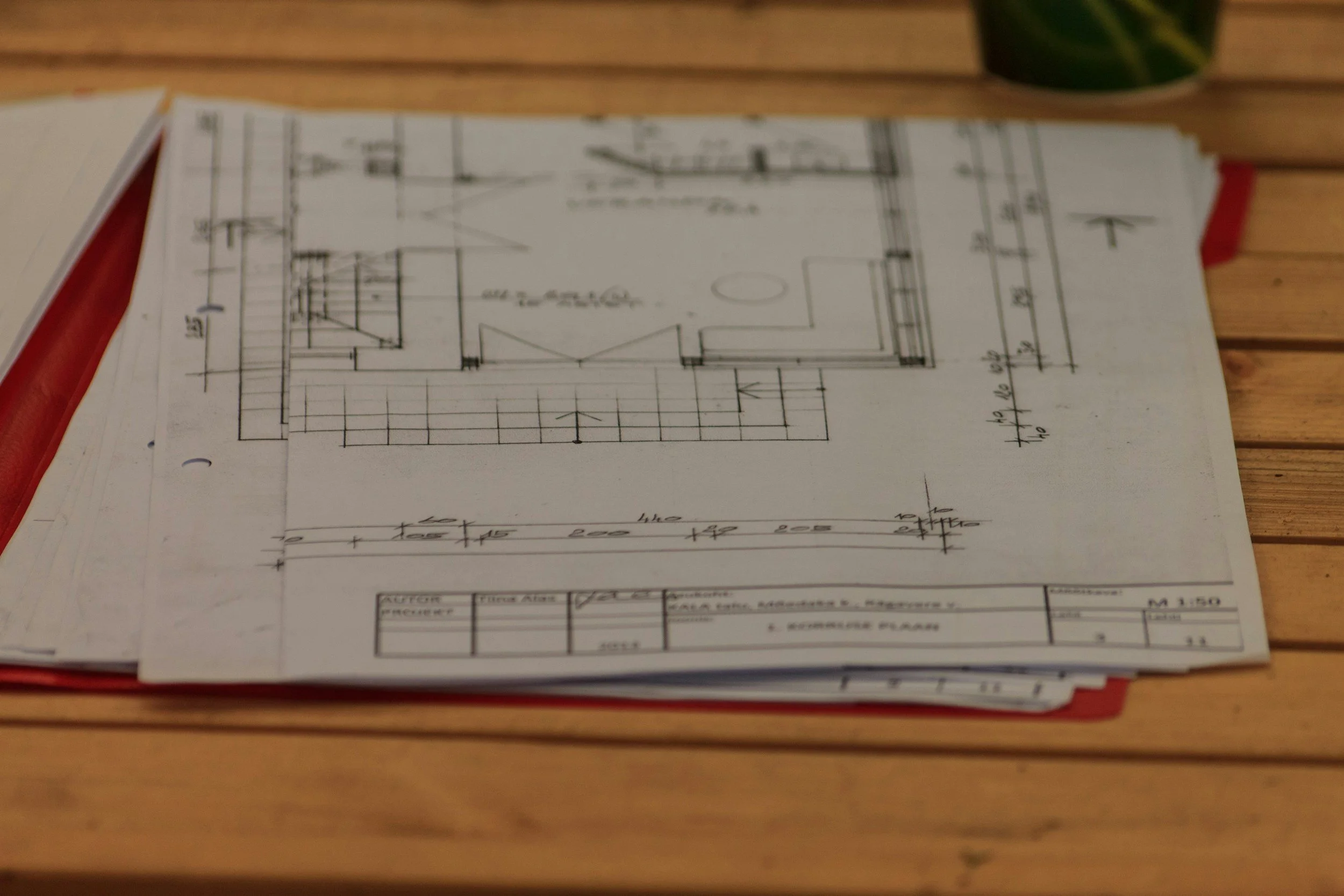
A Construction Drawings (CD) package is the complete set of technical documents required to build a project. It covers everything from site positioning to electrical socket placement — structured to move from broad to specific, from site-level information down to individual construction details.
No reputable contractor can price or build a project without one. No building authority will issue a permit without one. It is not optional.
The components vary slightly depending on project type and complexity, but the core set is consistent across residential projects worldwide. Here's what it contains.
How the Sheets Are Organized: A, S, M, E, P
A construction set isn't one person's drawings — it's the coordinated work of several disciplines, and the sheet numbers tell you who drew what. Once you know the prefixes, you can navigate a set instead of flipping through it blindly:
A — Architectural. The plans, elevations, sections, and details that define the spaces, openings, and finishes. This is the bulk of what you'll recognize as "the drawings."
S — Structural. How the building stands up: foundations, framing, beams, connections. Drawn by the structural engineer and coordinated with the architecture.
M — Mechanical. Heating, cooling, and ventilation.
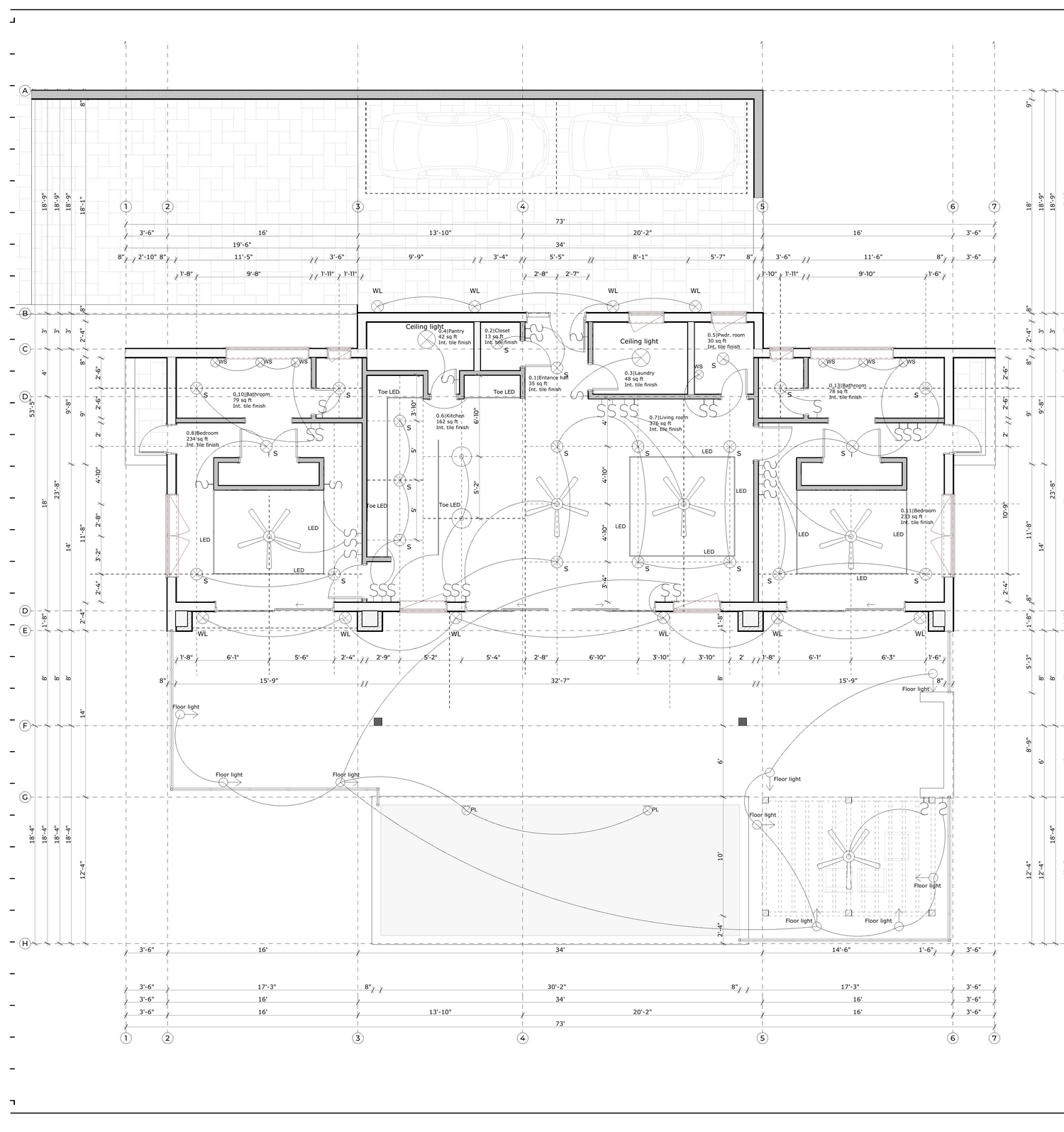
E — Electrical. Power, lighting, and low-voltage — outlets, fixtures, panels, and the schedules that go with them.
P — Plumbing. Supply, drainage, and fixtures — often shown both in plan and as an isometric that maps the whole system in three dimensions.
Some sets add more — C for civil (site and grading), FP for fire protection, ID for interiors. The alphabet isn't the point. The point is that a complete house set is several disciplines reconciled against each other. When they're drawn in isolation and never coordinated, the gaps between them become the problems you discover on site.
Project Cover and Notes
Every CD set opens with three administrative sheets:
Cover sheet — identifies the project, client, architect, and issue date
Notes page — lists general specifications, applicable codes, and drawing conventions
Drawing index — a complete list of every sheet in the set, with titles and sheet numbers
These are often skimmed or ignored by clients. Don't. The notes page in particular contains assumptions and specifications that govern the entire set.
Site Plan
The site plan shows where the building sits on the lot — its position, orientation, setbacks from boundaries, and relationship to any natural site features such as trees or slopes.
It is drafted from a survey and topographic map, which must be commissioned from a licensed surveyor before design can begin. The survey establishes lot dimensions, area, and existing site conditions. Without it, there is no basis for a site plan — and no basis for design at all.
If your architect starts designing without a survey in hand, that's a red flag.
Foundation Plan
The foundation plan shows the layout, placement, and dimensions of the foundation system. It ties directly into the structural axis — a diagram that identifies load-bearing walls, beams, and columns across the building.
Structural axes are most common in concrete and steel structures. In timber-frame construction, load distribution is handled differently and the axis is less prominent. Either way, the foundation plan is one of the first drawings a structural engineer will review.
Floor Plans
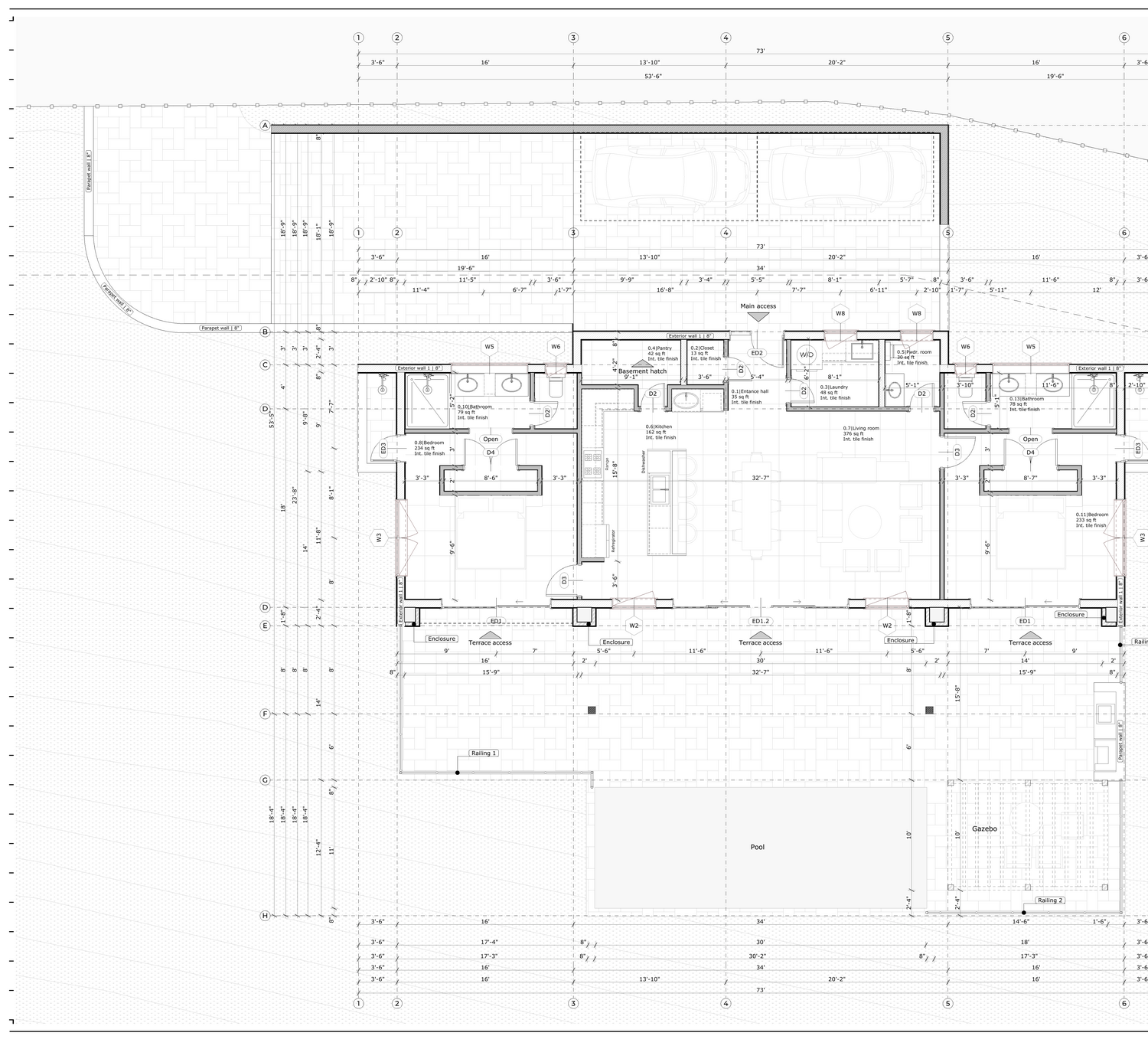
Floor plans are the most information-dense drawings in the set. Each floor gets its own plan, showing:
Wall structure and layering
Interior and exterior dimensions
Door and window positions, IDs, and dimensions
Room labels, areas, and floor finishes
Furniture placement (for spatial reference)
For the roof, a dedicated roof plan is also included, showing slope directions, angles, and drainage points.
Floor plans are what most clients spend the most time looking at. They're useful for understanding layout — but they don't tell you how anything is built. That's what sections and details are for.
Elevations
Elevations are flat, two-dimensional projections of each exterior face of the building. They show:
Exterior finishes and materials
Door and window positions, IDs, and dimensions
Floor and element levels
Relationship to adjacent structures or ground level
Elevations are primarily a communication tool — they show what the building will look like from the outside, and they coordinate with the floor plans to confirm openings are correctly positioned and sized.
Not sure whether your drawings are complete enough to build from without surprises? That's a good Office Hours conversation — a focused look at your specific project, no obligation.
Sections
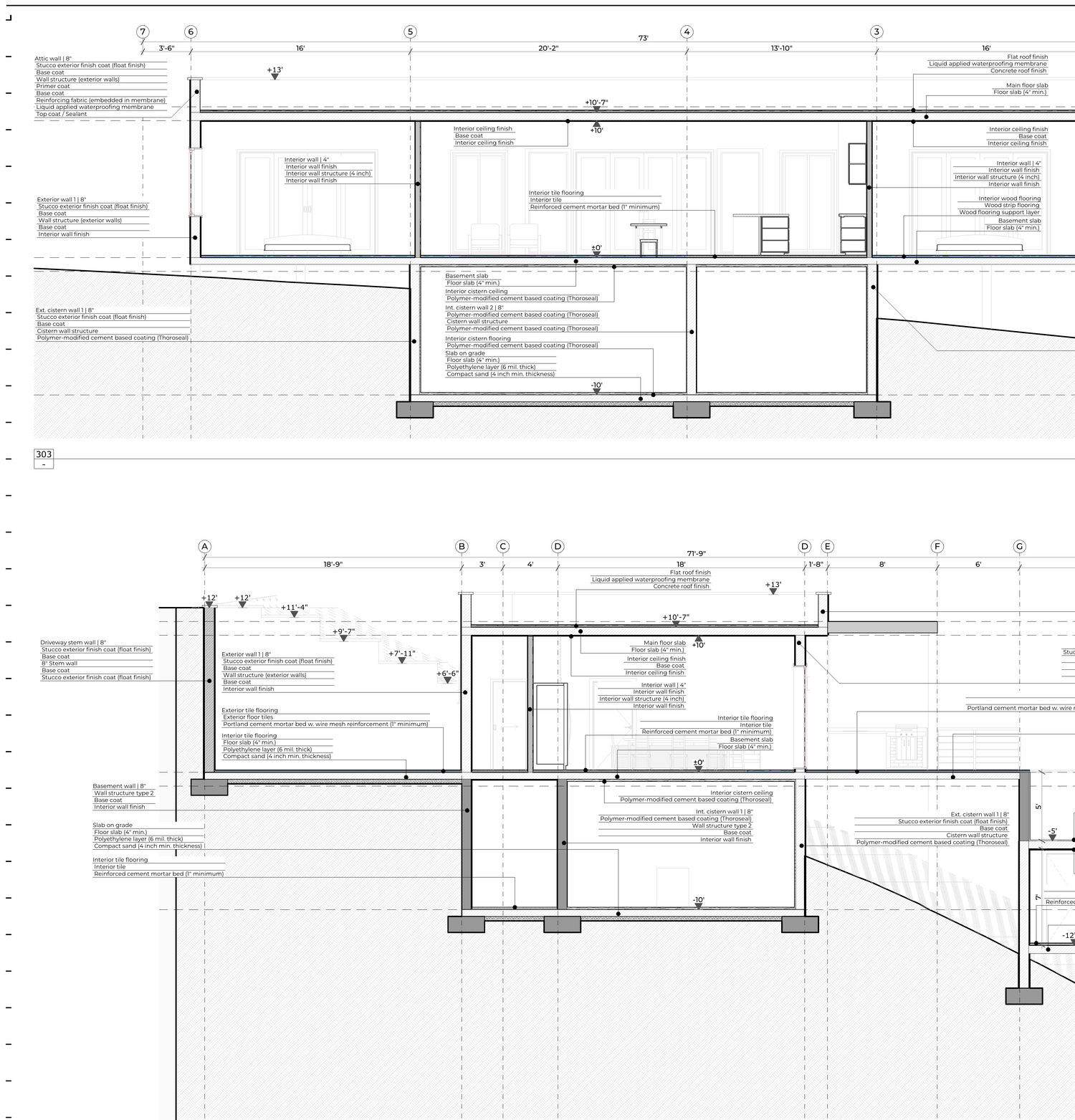
If floor plans show where everything goes, sections show how everything is built. A section is a vertical cut through the building, revealing its internal structure from foundation to roof.
A standard set includes at a minimum two sections — one longitudinal, one cross — with more added for complex projects. Sections are the second most critical drawings in the set after plans. They show:
Floor build-up: structure, insulation, and finish layers
Wall composition: interior finish, structure, insulation, cladding
Ground floor slab type and relationship to grade
Roof structure and layering
How the building sits on the site
Where construction details are located
A CD set with weak or incomplete sections is a serious problem. It means the contractor is left to make structural decisions they shouldn't be making.
Framing Plans
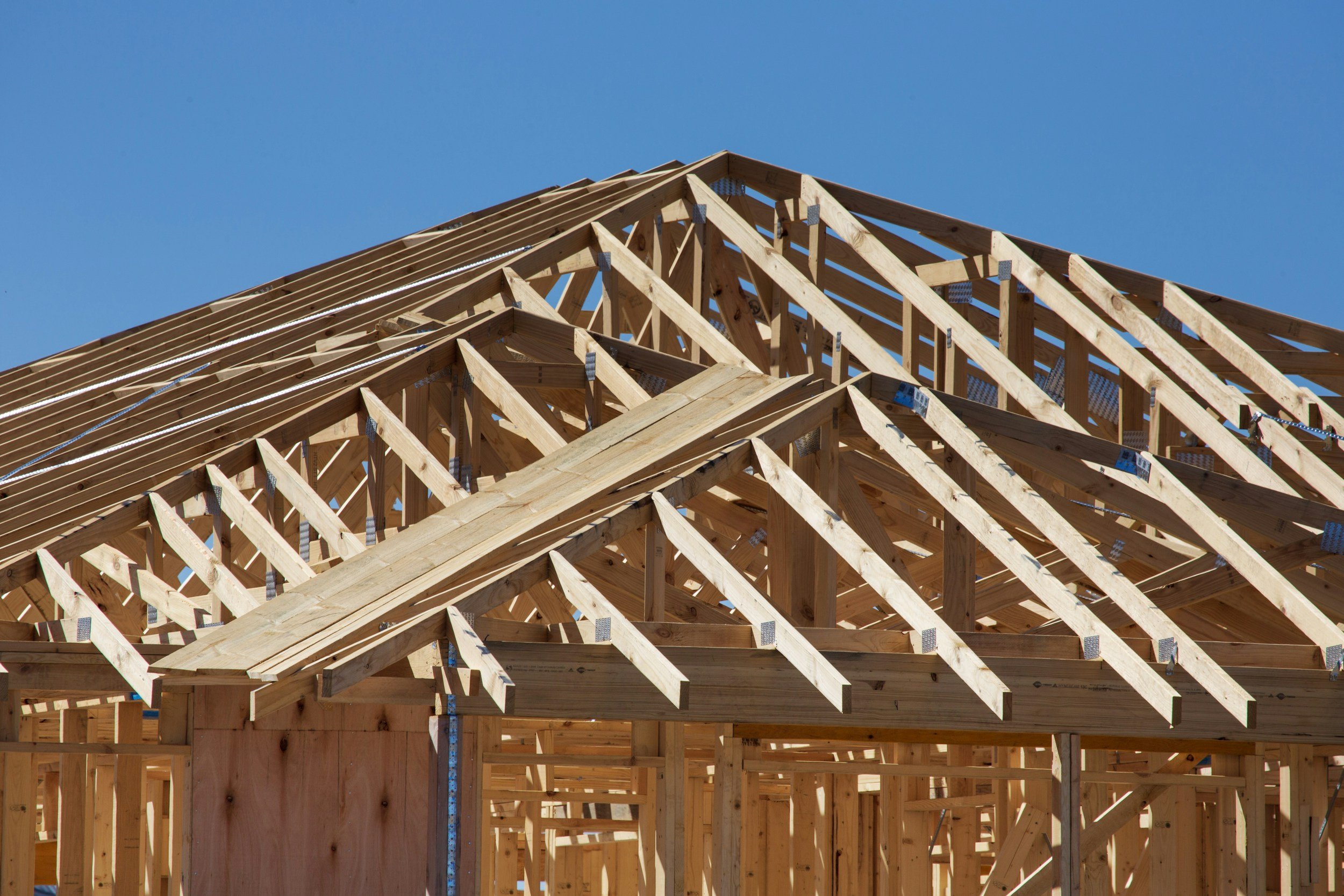
Framing plans document the structural layout of floor and roof assemblies — the placement, spacing, and dimensions of every framing member. They are most common in timber-frame construction.
For floors, framing plans show how the upper-level structure is laid out. For roofs, they show rafter or truss placement and any structural modifications for penetrations (skylights, chimneys, mechanical equipment).
In concrete or steel structures, framing plans are typically replaced by structural engineer drawings, which are a separate document set outside the architect's scope.
Stair and Railing Details
Staircases are among the most regulated elements in residential construction — governed by fire egress requirements, accessibility standards, and local building codes. The stair detail is a section through the staircase showing:
Step height (rise) and depth (going)
Overall stair dimensions and levels
Structural composition
Design intent
The railing detail follows the same logic: dimensions, heights, fixing method, and general design.
In many jurisdictions, stair details must be submitted as part of the building permit application. Getting them wrong — or leaving them underdeveloped — can delay permitting significantly.
Detail Plans and Interior Elevations
Detail plans take specific areas of the floor plan and enlarge them to show precise dimensions and fixture placement. They are standard for kitchens and bathrooms, where the density of components requires a level of precision that standard floor plan scale can't support.
Interior elevations accompany these plans, showing vertical dimensions, finish information, and the placement of cabinetry, fixtures, and fittings on each wall face.
For kitchens: cabinet types, appliance positions, sink and fixture placement, finish specifications. For bathrooms: fixture placement, finish specifications, level dimensions.
These drawings are also where coordination with kitchen and bathroom suppliers typically happens. If your supplier needs shop drawings, these are the starting point.
Construction Details
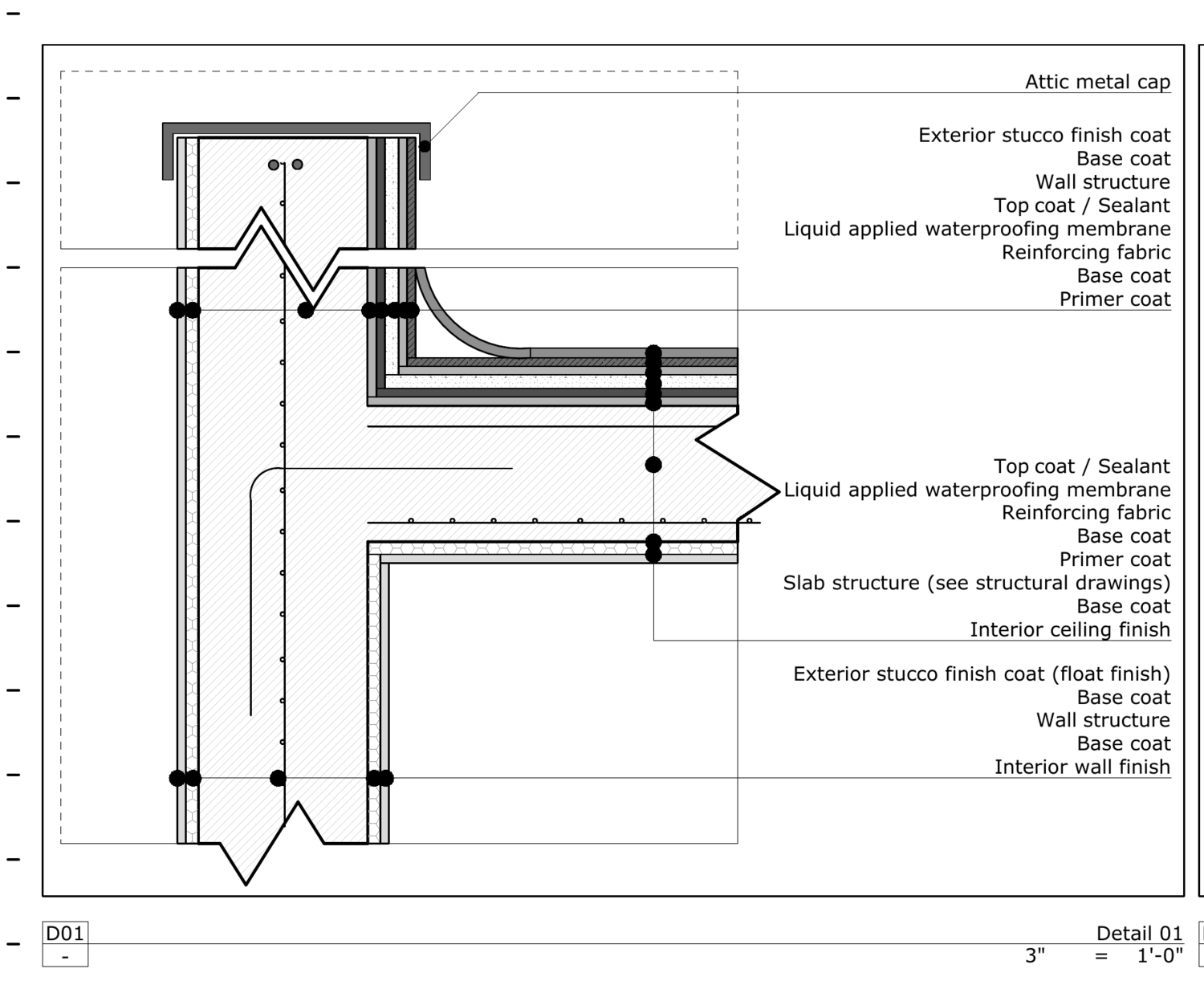
Construction details are the highest-resolution drawings in the set — large-scale cutaways (typically 1:10 or 1:5) that show exactly how specific building elements are assembled, layer by layer.
There are two categories:
General details — cover standard construction conditions: wall-to-foundation junctions, window reveals, roof edge conditions. These use typical material references without specifying exact products.
In-depth details — used for complex or custom conditions. These include exact material specifications, supplier references, dimensions, and assembly sequences.
For most residential projects, the majority of details will be general. In-depth details are reserved for non-standard conditions — custom joinery, unusual structural junctions, bespoke cladding systems.
After plans and sections, construction details are the third pillar of the set. A project built without adequate details is a project built on guesswork.
Door and Window Schedule
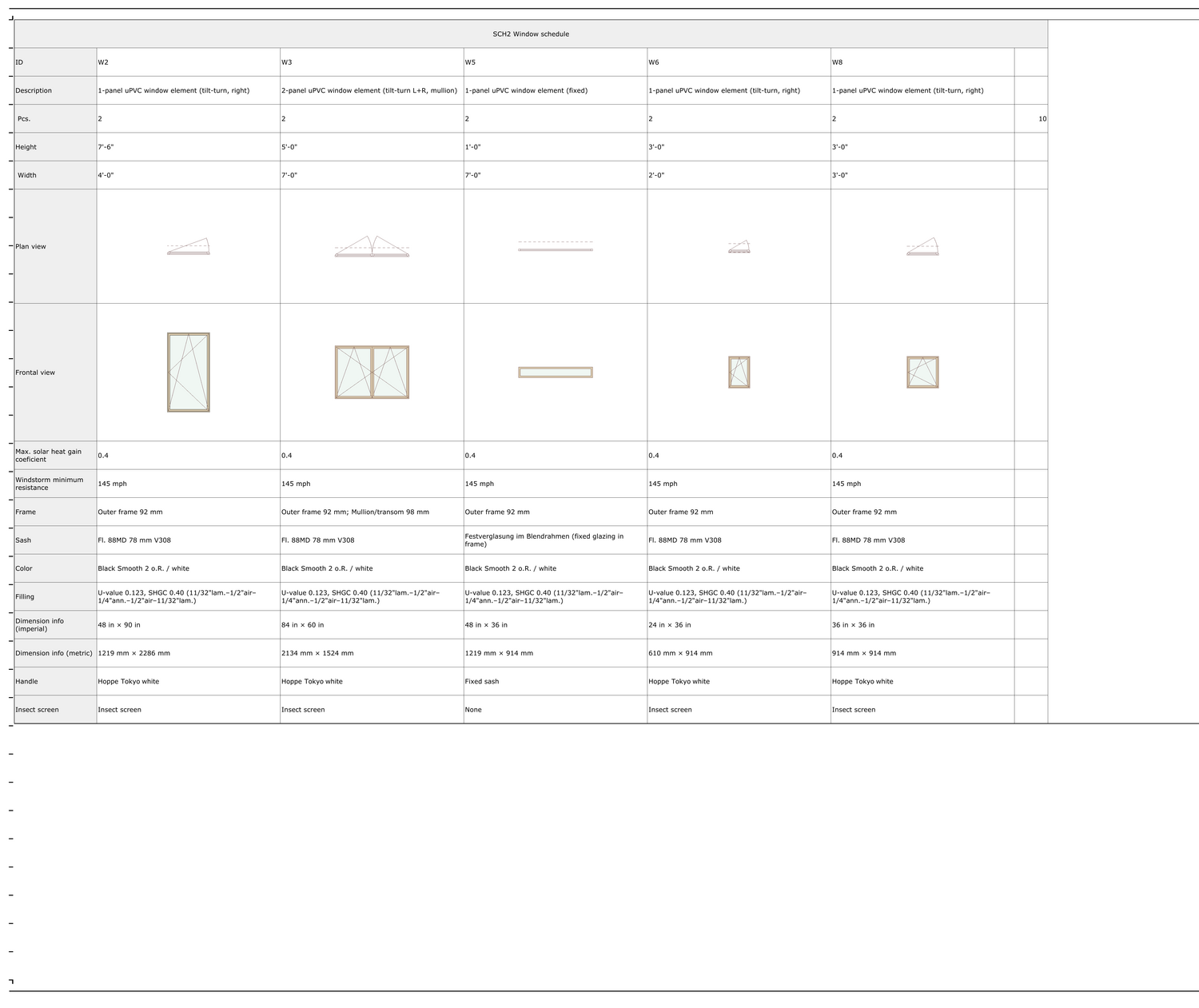
The door and window schedule is a complete inventory of every opening in the building. For each entry it includes:
ID number (cross-referenced to plans and elevations)
Dimensions (width × height)
Plan and elevation views showing opening direction and typology
Frame material and finish
Glazing type (where applicable)
Opening mechanism
This document goes directly to the joinery supplier or window manufacturer. Its accuracy determines whether what gets ordered matches what was designed.
Bill of Quantities and Material Specifications
The bill of quantities (BOQ) is a calculated list of every material required for the build, with quantities expressed in square meters, cubic meters, or linear feet depending on material type and project location.
It is the primary tool for accurate project pricing. A contractor pricing from a BOQ is pricing from facts. A contractor pricing without one is estimating — and estimates drift.
In more detailed packages, separate BOQs may be provided for specific systems: timber framing elements (with section sizes and lengths), specialty finishes, or fixed joinery.
Material specifications accompany the BOQ and show how each finish should look — using images and written descriptions. Their practical value is this: when a specified material is unavailable or over budget, the specification gives the contractor and client a clear reference point for finding a suitable alternative. On new build projects especially, substitutions are common. Having a specification means substitutions are controlled, not improvised.
Electrical Layout and Schedule
The electrical drawings cover two documents:
Layout plan — shows the position of all lighting fixtures, switches, sockets, and electrical installations, along with circuit connections
Schedule — a complete list of every electrical element from the plan, with type, specification, and location
These drawings establish the design intent for the electrical system. They do not replace the work of a licensed electrician, who will use the layout as the basis for load calculations and the final technical design. The architect draws where things go. The electrician determines how to get power there safely.
HVAC Layout and Schedule
The HVAC drawings follow the same structure as the electrical set:
Layout plan — shows the position of all heating, cooling, and ventilation components: radiators, fan coil units, air handling units, diffusers, and any exterior equipment
Schedule — a complete list of every HVAC element with type, specification, and location
As with electrical, these drawings define the design intent. An HVAC engineer or specialist contractor will take them and produce the final system design, including equipment sizing, duct routing, and controls specification.
Plumbing Layout
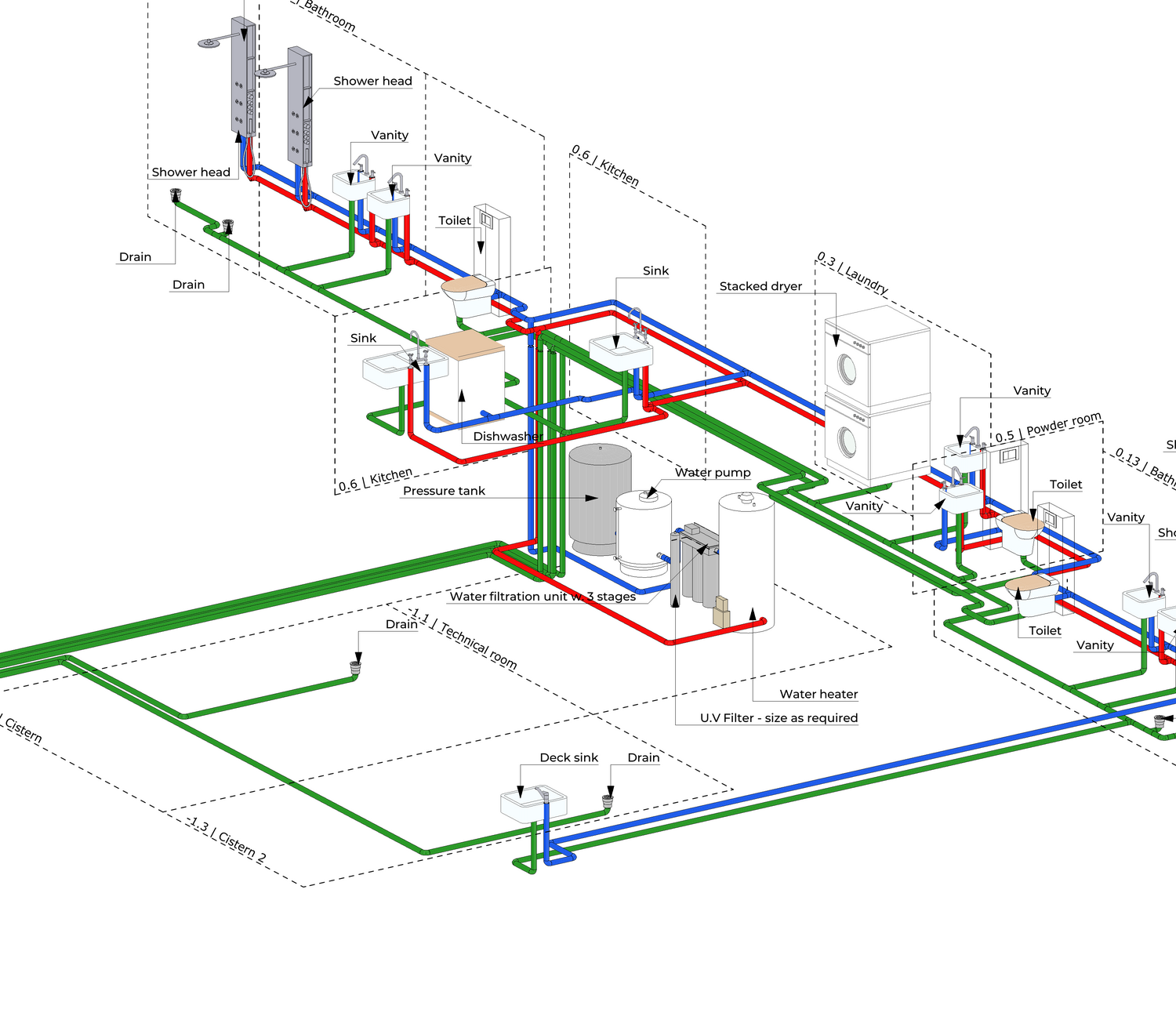
The plumbing layout shows the position of all plumbing fixtures and connections — supply, waste, and drainage. It is not always included in the architect's scope, particularly on straightforward projects where a plumbing contractor works directly from the floor plans.
On more complex projects — or where the architect is coordinating all consultants — a dedicated plumbing layout will be part of the CD set.
Permit Set vs. Construction Set: Not the Same Thing
It's worth understanding the difference, because it affects both your timeline and your control over the final cost.
A permit set is the drawings a jurisdiction needs to approve your build — enough to show the design meets code and zoning. It sits closer to a developed design-development set than to a full construction set. You can often obtain a permit, and even break ground, on less than a complete set.
A construction set goes further: it specifies exactly how the building goes together — every assembly, junction, and material named, coordinated across disciplines, complete enough for a contractor to price accurately and build without guessing.
The gap between the two is where cost control lives. Every decision left out of the drawings doesn't disappear — it gets made on site, by someone who isn't you, under time pressure. That is the mechanism behind most change orders and cost creep. Permitting from a lighter set can be the right call on a straightforward build, or to start sooner — just go in knowing that whatever the drawings don't decide, the field will.
A Note on Scope and Completeness
The single idea to take away: a drawing set is a series of decisions made on paper, where they're cheap to change and yours to make. Whatever a set leaves undecided gets decided on site — faster, under pressure, and usually at a premium. "How complete should my set be?" is really the question "how much of the outcome do I want to control?"
Not every project requires every document listed here. What's included depends on two things:
Project type — a concrete structure won't have timber framing plans. A simple single-storey build may not require a dedicated plumbing layout.
Project complexity — a straightforward build will use general construction details. A project with custom elements, unusual materials, or complex geometry will require in-depth details across more of the set.
What doesn't change is the core set: plans, sections, elevations, schedules, and details. These are non-negotiable regardless of scale or budget. The rest scales with the project.
A thin CD set on a complex project is one of the most reliable predictors of cost overruns and construction disputes. The drawings are where decisions get made. Every decision deferred from the drawing board gets made on site — at higher cost, under pressure, and without the time to get it right.
If you're planning a custom build and want to understand what a proper CD set should look like for your specific project, Office Hours is a good starting point — a focused consultation before you commit to anything.