Hiring a Remote Architecture Firm: How It Works and Why It Opens Up Your Options
This article is written for homeowners and first-time builders considering whether to hire outside their immediate area — not for contractors or builders looking for a design partner. If that's you, the Regis Studio page is the right place.
When BIG designs a cultural center in a country where none of its architects have ever lived, nobody questions whether it will work. The same is true of Renzo Piano, Foster + Partners, or any of the firms whose names have become shorthand for architectural ambition. Remote practice — working across borders, time zones, and building cultures — has been standard operating procedure for large firms for decades.
What's changed is that it's now a realistic option for residential clients hiring someone to design their home. That shift is recent, and most homeowners haven't caught up to it yet. The assumption is still that your architect should be local — someone you can meet for coffee, who knows the permit office by name, who can swing by the site on a Tuesday. That assumption is worth examining. Because the tools that once made remote practice the exclusive domain of well-resourced institutional firms are now available to boutique studios, and the client on the other end of a custom home project stands to benefit directly.
This article explains how it works — and why, for the right project, it's not a compromise at all.
Remote Architecture Isn't New — But It's New to You
Large firms have always worked remotely. They could afford to because they had the infrastructure: legal teams to navigate foreign legislation, project managers to coordinate across time zones, local consultants on the ground, and enough staff to absorb the complexity. Distance was a resource problem, and they had the resources to solve it.
Boutique studios didn't. A small practice taking on a project three time zones away — or in a different country — was exposed in ways a large firm wasn't. The margin for error was tighter, the support thinner, and the tools available simply weren't built for that kind of distributed coordination.
That changed. Not overnight, and not because of any single development, but because a combination of advances in modeling software, project management platforms, and communication tools quietly eliminated the operational gap between a large firm and a well-run small one. What used to require a team of twenty can now be handled by a focused studio with the right setup.
The residential client is the main beneficiary of this shift — and most of them don't know it yet.
Remote-First vs. Remote-Adapted — The Difference Matters
A remote-first practice and a traditional practice that switched to video calls are not the same thing, and the difference matters to you as a client.
When an existing office model is adapted for remote work, the underlying structure stays intact — the same workflows, the same meeting rhythms, the same assumptions about how decisions get made. Remote becomes a workaround layered on top of a system designed for physical presence. It works, up to a point, but the friction doesn't disappear. It just changes shape.
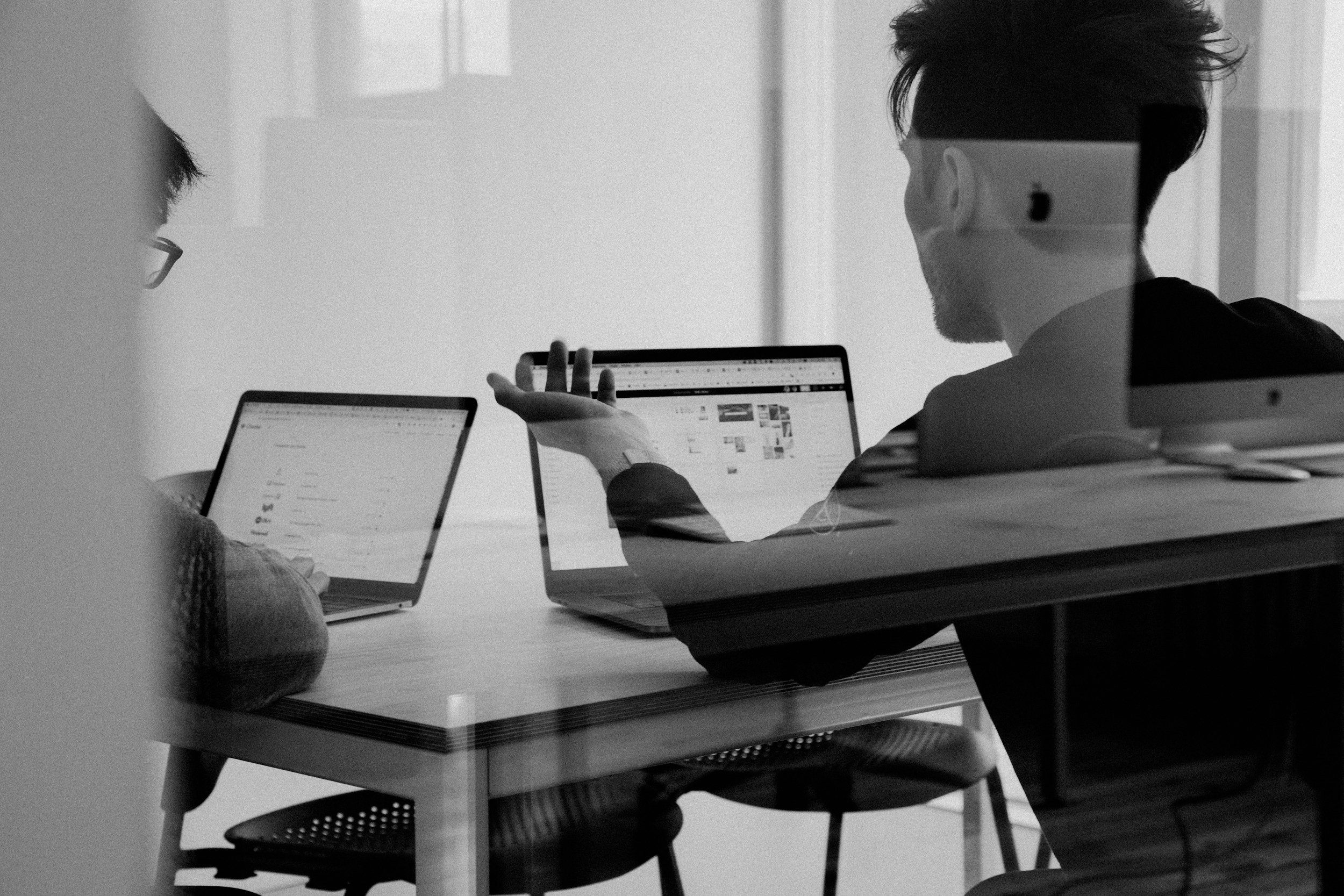
A practice built for remote from the start is different. The project management systems, the communication tools, the way information moves through a project — all of it is designed for a practice that doesn't depend on everyone being in the same room. In practice, this means a focused call replaces a site visit — not as a compromise, but as the sharper option. Prepared in advance, documented clearly, producing decisions rather than impressions. No ambiguity about what was agreed. No reconstructing a conversation from memory three weeks later.
The result is that somewhere between 70–80% of working time goes to design itself rather than to the machinery of running a practice. More iterations explored before a direction is fixed. More time on the details that determine whether a house feels right or merely finished.
Building Codes Are More Similar Than You'd Think
One of the first concerns about hiring across borders is legislation. How can a studio based in Europe design a home in Florida, or the US Virgin Islands, or anywhere outside its home jurisdiction?
The honest answer is that building codes, while not unified, share far more DNA than their differences suggest. Across Western markets — the US, Canada, the EU — the underlying logic is consistent. Safety standards, structural requirements, fire ratings, accessibility provisions: the principles are the same. What varies is how they're organized and how local development culture shapes their application.
The US operates on centralized model codes — the International Building Code, the International Residential Code — adopted and amended at the state or municipal level. The EU uses a more decentralized approach, with requirements distributed across national legislation, local statutes, and European standards. Navigating a decentralized system takes more effort. It does not take a different kind of expertise.
Where codes genuinely diverge is in the assumptions they encode about how people live. American codes reflect a car-dependent development pattern — setbacks, parking requirements, lot coverage rules — that simply don't appear in the same form in denser European contexts. A studio that has worked in both environments doesn't just know the rules. It understands why they exist, which makes it much better at working within them efficiently.
Cross-jurisdictional experience isn't a liability. It's a resource.
BIM — The Technology That Makes It Real
If there's a single development that made remote residential practice viable for boutique studios, it's Building Information Modeling. BIM is not just a drafting tool. It's a way of building a complete digital twin of a project — a live, three-dimensional model that holds every piece of information about the building in one place.
In a traditional drawing set, information lives across dozens of separate sheets that need to be manually coordinated. A change to a structural element has to be tracked through the architectural drawings, the MEP layouts, the specifications. In a BIM model, the building is a single object. Change one element and the implications ripple through the model automatically.
For a remote project, this matters enormously. The site exists in full fidelity inside the model: topography, orientation, dimensions, constraints. Design options can be tested and discarded virtually, before committing to a direction that hasn't been properly examined. The client sees real proposals, not approximations. Revisions happen in the model, where they cost almost nothing, rather than on a building site, where they cost considerably more.
The architect who isn't physically present on site needs to have complete command of the building in every other way. BIM provides that — fewer errors, fewer surprises, and a project team always working from the same current information regardless of where they're sitting.
Project Management Without the Chaos
Remote projects don't run themselves. The coordination that happens naturally when everyone is in the same office has to be replaced with something more deliberate. This is not a weakness of remote practice — it's an opportunity to build better process than most local projects ever have.
At a well-run remote studio, that means a structured project management framework — a living project diary where every input and output is documented in one place: client feedback, engineering submissions, contractor queries, design decisions, organized across the full phases of the project. The result is a single source of truth that everyone on the project can access at any time. For a client, this level of documentation means full visibility at every stage — not a periodic update, but a continuous record. For a project that might run eighteen months or more, that visibility is not a small thing.
Considering a remote studio for your project and want to understand whether it's the right fit? Office Hours is a free 45-minute session — bring your project, your site, and your questions.
Communication Is Actually Better
This one tends to surprise people. The assumption is that remote projects mean less contact — fewer meetings, more silence, a relationship conducted largely by email. The opposite is usually true.
Because the connection has to be built deliberately, it tends to be built more carefully. Calls are more frequent and more structured. There is less drift. The client isn't waiting for a site visit to get an update; they're in the loop on a regular cadence that remote practice makes the default rather than the exception.
The other development worth noting is asynchronous video. Email is a poor medium for explaining why a structural beam needs to move, or why a window placement isn't working. A short screen-recorded video — the architect talking through the drawings in real time — communicates in five minutes what would take thirty minutes to write and still leave room for misunderstanding. It's a simple tool that disproportionately improves the quality of technical communication between architect, client, and specialist consultants.
What the Client Actually Gets
Hiring a remote architecture studio isn't just a logistical arrangement. It changes who you have access to.
A studio that has worked across multiple countries and jurisdictions brings something a purely local practice can't offer: genuine breadth of reference. Not the studied breadth of someone who has read widely, but the operational breadth of a team that has actually navigated different building cultures, different client expectations, and different ways of solving the same problems. That exposure shapes how a project gets designed — the options that get considered, the assumptions that get questioned, the solutions that get reached.
It also means you're making your hiring decision based on fit, expertise, and track record — not on who happens to be within driving distance of your site. Geography stops being a filter, which is a significant expansion of your actual options.
Distance Isn't the Risk
The hesitation around hiring a remote firm is understandable. It's unfamiliar, and unfamiliar things feel risky. But the risk in any architecture project isn't distance. It's hiring a firm that doesn't have the process, the tools, or the experience to deliver — whether they're local or not.
A remote studio with rigorous project management, command of BIM, cross-jurisdictional fluency, and a communication process built for the distance isn't asking you to accept a compromise. It's offering you something most local firms can't match.
The question was never really about geography. It was always about capability.
If you're planning a custom build or renovation and want to understand whether a remote studio is the right fit, Office Hours is a free 45-minute session. No brief required, no obligation.